

Groundbreaking research in Pain Reprocessing Therapy (PRT) provides a new perspective
Chronic pain can feel like an endless struggle, leaving many to believe they have no choice but to live with it. However, groundbreaking research in Pain Reprocessing Therapy (PRT) provides a new perspective: chronic pain—especially neuroplastic pain—is reversible by retraining the brain’s response to pain signals.
If you’re wondering where to start with Pain Reprocessing Therapy, this guide will break down the core principles of PRT, explain its role in overcoming chronic pain, and provide free resources, including books, videos, and scientific research, to help you embark on your healing journey.
Understanding Neuropathic Pain as a Learned Process
Studies often suggest that a large proportion of chronic pain conditions like fibromyalgia, back pain, and repetitive strain injuries may have a significant neuroplastic component.
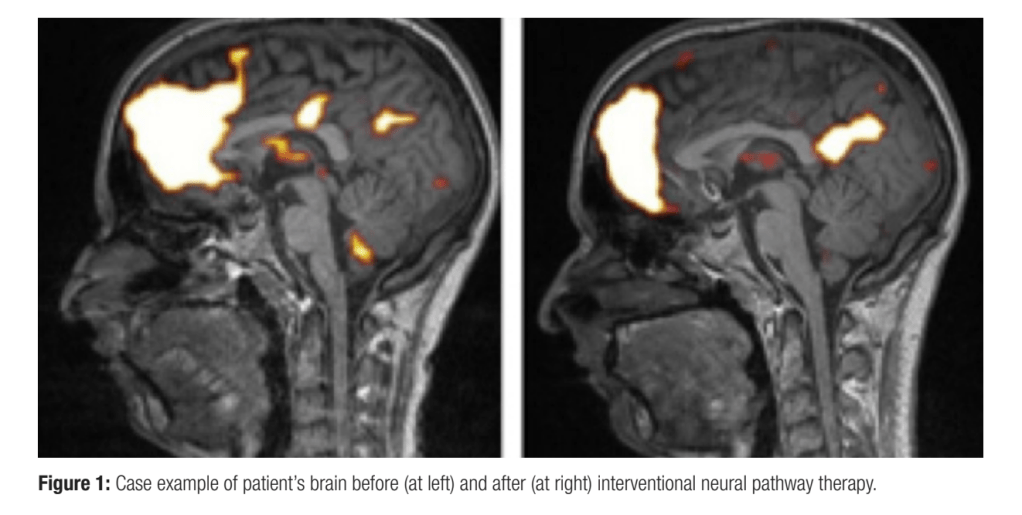
Pain is not only a sensation—it is a learned response by the brain. Neuropathic pain occurs when the brain mistakenly continues to send pain signals even after an injury has healed. Studies using functional MRI scans have shown that chronic pain is processed in the prefrontal cortex and limbic system—areas of the brain responsible for learning, emotions, and habits—rather than in the sensory pain centers where acute pain is typically processed. This suggests that chronic pain is maintained as a conditioned response, much like a habit that the brain has learned to protect you from a past threat that no longer exists.
How to Reprogram the Brain and Overcome Chronic Pain
Since chronic pain is a learned response, it can also be unlearned. The key to overcoming chronic pain is teaching the brain that your body is now safe and does not need to send pain signals. Here’s how:
1. Acknowledge That You Are Not Broken
- Mantra: Brain, thank you for keeping me safe, but you can relax.
- Once, your brain did exactly what it was supposed to do—send pain signals to protect you from an injury or health issue. This response was crucial at the time, helping you heal and stay safe. However, over time, your brain may have learned to continue sending these signals long after the original issue resolved. Even physiological triggers can create conditioned responses. Now, this learned habit can be unlearned. There is no longer a need for your brain to send pain signals, and you can reassure yourself that you are safe and capable of healing.

2. Identify the Factors That Caused Mind-Body Syndromes and Reassure Your Brain That You Are Safe
- Chronic pain often stems from unresolved stress, trauma, or deep-seated fears. Ask yourself: What factors contributed to my mind-body syndrome? Then, craft an authentic message of safety that your brain needs to hear, such as: I am no longer in danger. My body is strong. I am safe now.
- Fear keeps the pain cycle alive. Calmly and repeatedly tell yourself: I am safe. My body is healed. My brain can relax.

3. Engage in Somatic Tracking
- Somatic tracking helps you observe pain without fear, reducing its intensity over time. Instead of reacting with anxiety, approach the sensation with calm curiosity. Acknowledge it as a harmless signal from your brain rather than a sign of danger.
- Notice the sensation’s shape, size, and movement without judgment. Remind yourself: Brain, thank you for keeping me safe, but you can relax.
- Stay engaged in daily activities rather than avoiding them. Avoidance reinforces the pain cycle, while movement, laughter, and social interaction reassure your brain that you are safe.
- Breathe deeply through your nose, extending your exhalation, and consciously relax any tense muscles. This signals to your nervous system that there is no threat.
- Over time, this practice helps your brain reclassify pain as non-threatening, gradually reducing its intensity and frequency.- Over time, this practice helps your brain reclassify pain as non-threatening, gradually reducing its intensity and frequency.

4. Retrain Your Brain with Joyful Activities
- Engaging in activities that bring you joy and fulfillment plays a crucial role in pain reprocessing. By focusing on movement, laughter, and meaningful experiences, you teach your brain that life is safe and enjoyable.
- Identify activities you used to enjoy but may have avoided due to pain, and begin reintroducing them at a comfortable pace. Engaging in light physical movement, such as walking, stretching, or dancing, reinforces that movement is safe. Incorporate hobbies, social connections, and creative outlets that stimulate positive emotions and shift focus away from pain.
- Acknowledge small victories—every step forward strengthens new neural pathways that rewire the brain toward safety and healing.
- Remind yourself: I am capable of joy. My body is strong. Pain does not define me.

5. Interrupt Negative Thought Patterns
- Negative thinking reinforces the brain’s pain signals, keeping the cycle alive. Retraining your mind to shift away from fear-based thoughts is a key component of healing.
- Recognize recurring negative thoughts like “This will never go away.” Instead of accepting them, challenge their validity and replace limiting beliefs with empowering affirmations, such as: My brain is healing. I am rewiring my pain response.
- Practicing mindfulness and meditation can help cultivate awareness and shift your mental state away from pain-focused thinking. Engaging in gratitude by focusing on what is working in your life helps redirect attention from pain to positive experiences. Keeping a thought journal can also be beneficial—writing down fears and reframing them into constructive statements trains your brain to adopt healthier patterns.
- Measure success by gradually re-engaging with activities that previously triggered symptoms. Each time you do something without reinforcing fear, you signal safety to your brain and reinforce new pain-free neural pathways.

Scientific Research on Pain Perception in the Brain
Several studies confirm that chronic pain is processed in areas of the brain associated with learning and emotions rather than physical damage:
- fMRI studies show that chronic pain is processed in the prefrontal cortex and limbic system, linking it to emotional memory rather than actual injury.
- A study published in JAMA Psychiatry (2021) found that Pain Reprocessing Therapy reduced chronic pain in 66% of patients by targeting the brain’s learned pain response.
- Research by Dr. Howard Schubiner demonstrates that fear and anxiety amplify pain, reinforcing the idea that pain persists due to learned neural pathways rather than physical damage.
Click here to read the JAMA Psychiatry study

Free Resources to Start Your Healing Journey
Books
- The Way Out by Alan Gordon – A step-by-step guide to PRT.
- Healing Back Pain by Dr. John Sarno – A foundational book on mind-body pain.
- Unlearn Your Pain by Dr. Howard Schubiner – An in-depth exploration of neuroplastic pain.
Videos
Dr. Howard Schubiner’s Interview – With powerful stories of people who overcame chronic pain.
Research Link
- JAMA Psychiatry PRT Study (2021) – Scientific evidence supporting PRT for chronic pain.
Start Your Journey with a Free Consultation
If you’re ready to take control of your pain, I offer a free consultation to help you understand whether Pain Reprocessing Therapy is right for you. In this session, we’ll discuss your pain patterns, explore potential solutions, and create a roadmap for healing.
Click [here] to book your free consultation and take the first step toward lasting relief.
Your brain is capable of change. You are capable of change. Healing is possible.
Your message has been sent

 mind body cure
Leave a comment